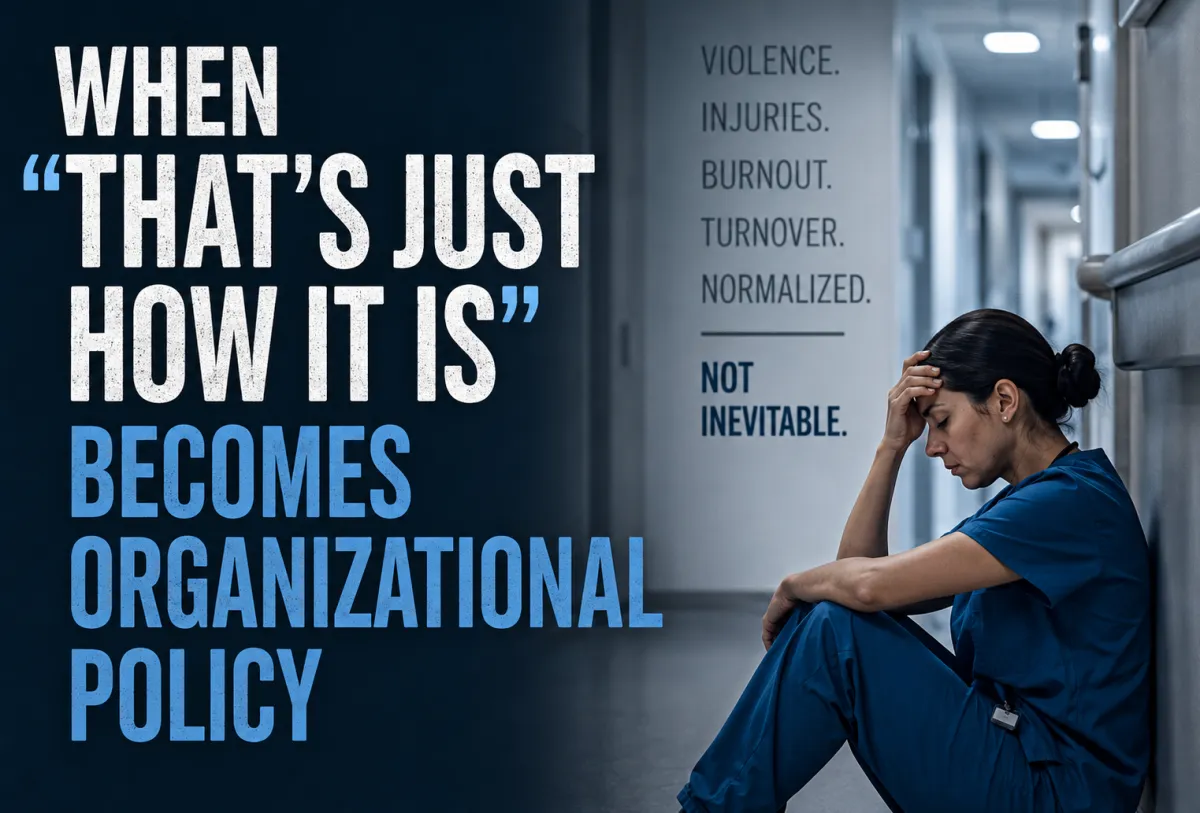
That's Just How It Is
A nurse recently shared something that stopped me in my tracks.
She had reduced her full-time position because she was tired of being injured at work.
One resident had experienced repeated psychotic episodes. Staff knew the risk. Management knew the risk. Everyone was waiting for a placement in a more appropriate facility.
In the meantime?
Staff were expected to keep working.
She suffered two broken ribs in two months.
When concerns were raised, the response was simple:
"That's just how it is."
That sentence should concern every healthcare leader.
Not because violence in healthcare is new.
Because somewhere along the way, predictable harm became an accepted operating condition.
When injuries become expected...
When assaults become routine...
When workers are told to "deal with it" until something changes...
The organization has quietly shifted from preventing harm to managing it.
That shift doesn't happen overnight.
It happens one incident at a time, one staffing decision at a time, one delayed intervention at a time, until everyone accepts a level of risk they would never have considered acceptable years earlier.
This is no longer about resilience.
It's about organizational tolerance for predictable harm.
I recently explored this issue in a new Authority Briefing:
Authority Briefing: When "That's Just How It Is" Becomes Organizational Policy
It examines how organizations gradually normalize worker injury, why that happens, and what leaders can do before acceptance becomes culture.
🔗When "That's Just How It Is" Becomes Policy | Authority Briefing
I'd be interested to hear from healthcare workers.
Have you ever heard the words, "That's just how it is" after someone was injured?